AI Knowledge Q&A
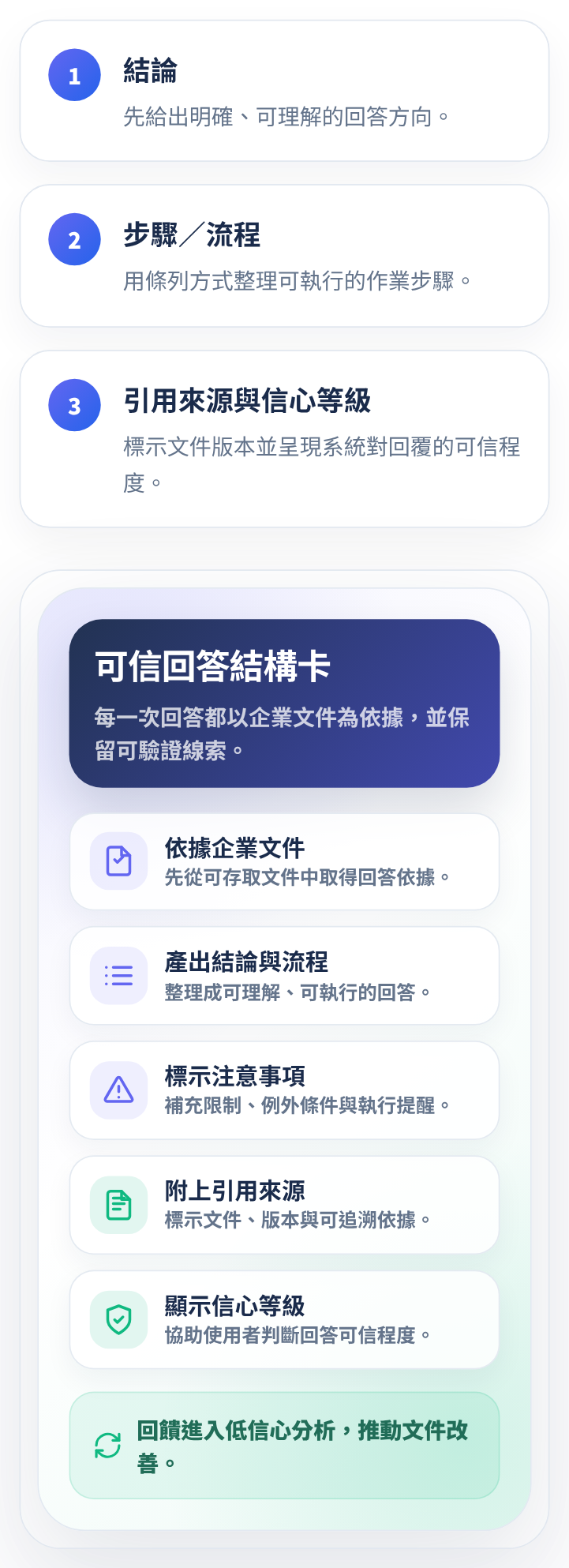
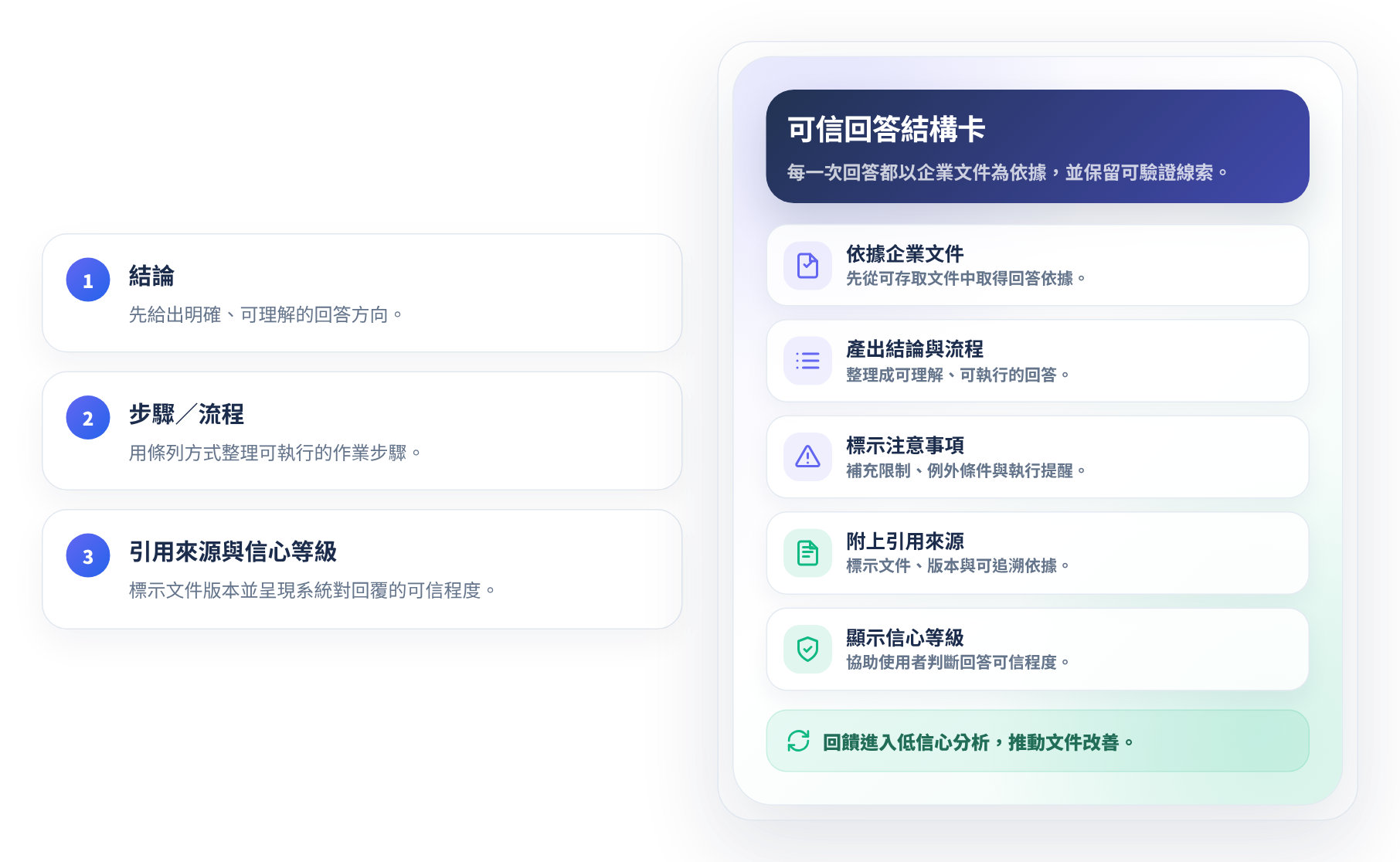
Users query internal documents in natural language. Each answer presents the conclusion, the procedure, cautions, cited sources and a confidence level, turning AI answers into an enterprise knowledge service that can be verified and managed.
•Document management: Upload, update, activate and version-control documents so answer sources stay clear and manageable.
•Knowledge Q&A: Query internal documents in natural language and get an answer you can act on.
•Cited sources: Answers show the cited document and version, so every AI reply traces back to its basis.
•Roles & permissions: Control document and feature access by administrator, user and department.
•Low-confidence analysis: Track frequent keywords, low-confidence questions and where documents need improvement.
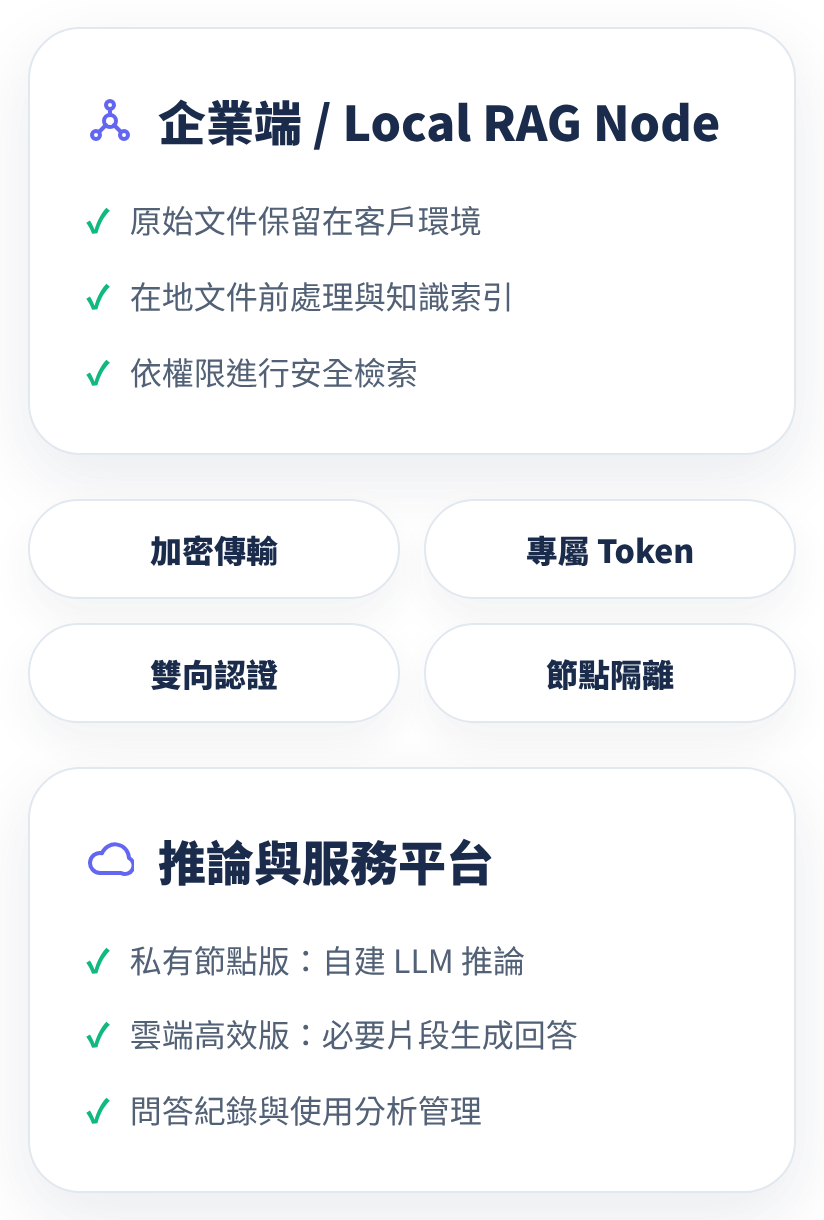
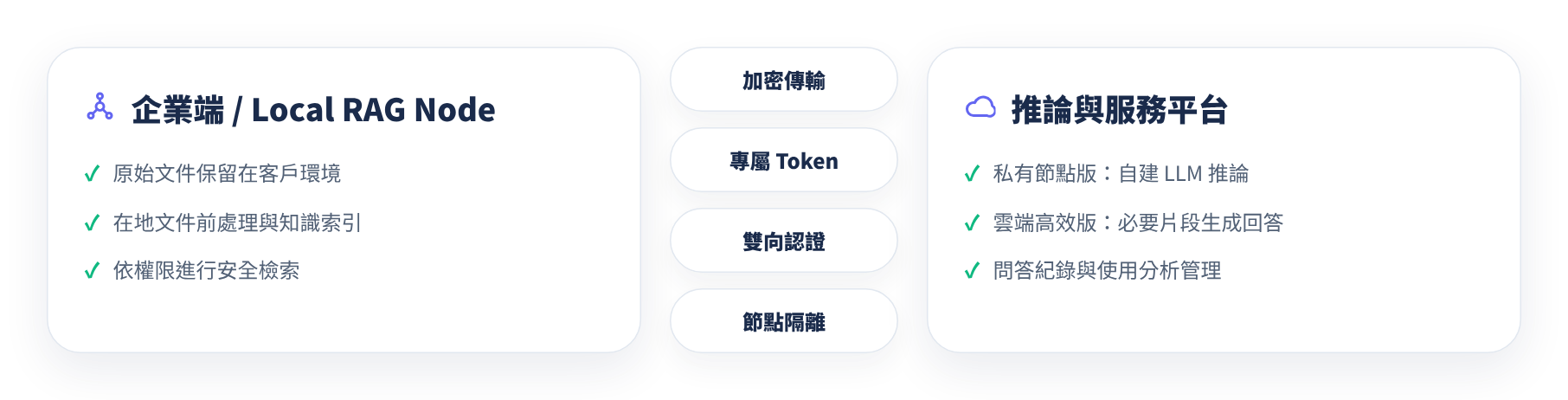
•Local RAG Node: Process, index and securely retrieve documents on an on-premises node.
Technologies
Answers are generated from retrieval over your enterprise documents, with cited sources, document versions, confidence levels and low-confidence question analysis to help users verify the basis of each answer.
On-Premises Data Security
Choose a private node or high-efficiency cloud inference according to your security requirements, and keep control of your original knowledge documents while adopting AI Q&A.
•Private Node Edition: On-premises RAG with self-hosted lightweight LLM inference. High document protection and predictable cost, suited to low-to-medium query volumes and sensitive documents.
•Cloud Performance Edition: Documents and RAG retrieval are managed on-premises; only the necessary retrieved passages are sent to a cloud LLM to generate answers, balancing data control and response efficiency.
Technologies
Documents stay on the enterprise side: SOPs, policies and technical documents need not all leave your environment. Local RAG indexing: parsing, chunking and retrieval run on-premises. Flexible LLM inference: choose a self-hosted or cloud LLM as needed. Verifiable answers: replies carry cited sources and confidence levels, reducing black-box concerns.
Implementation
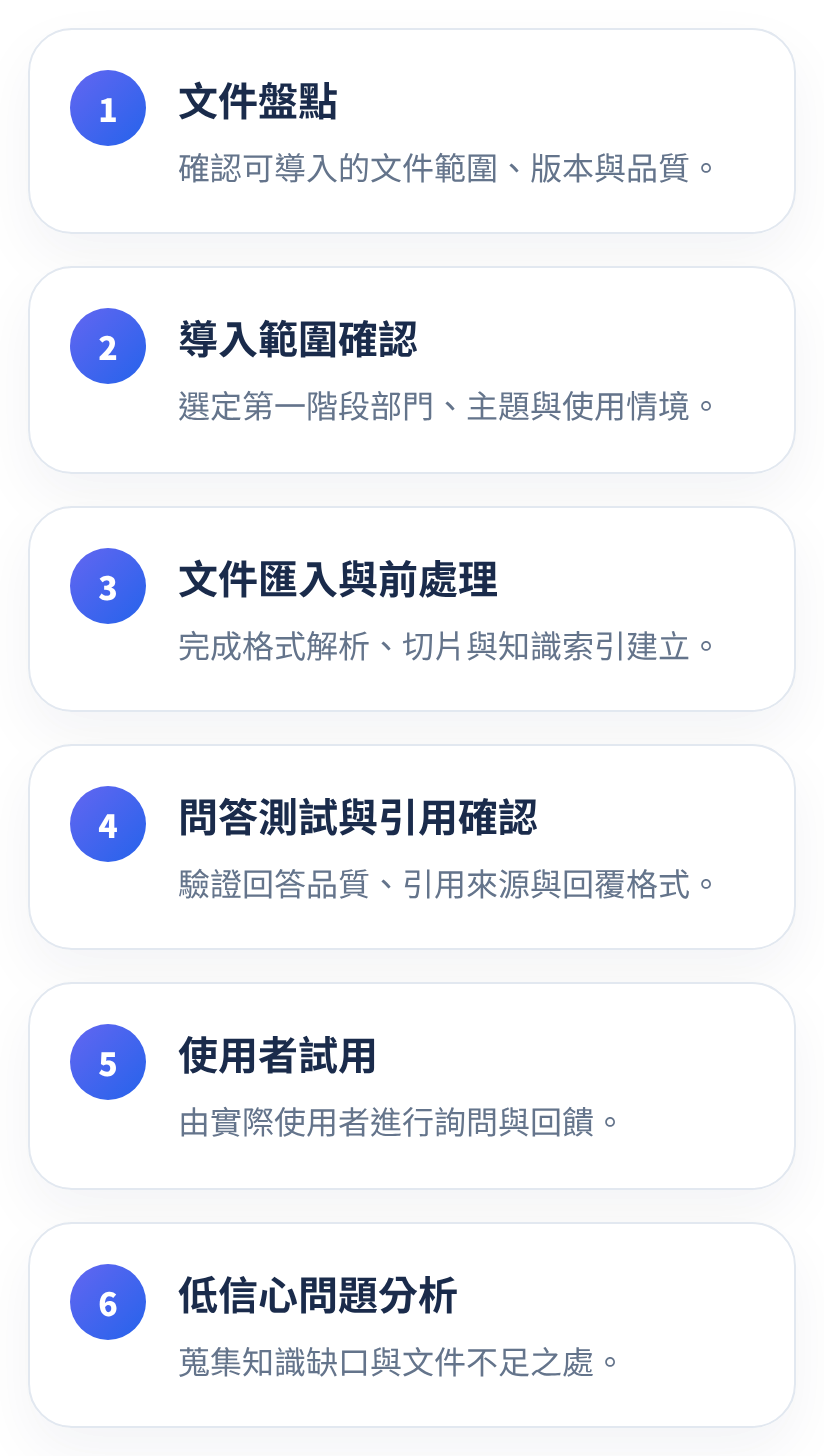
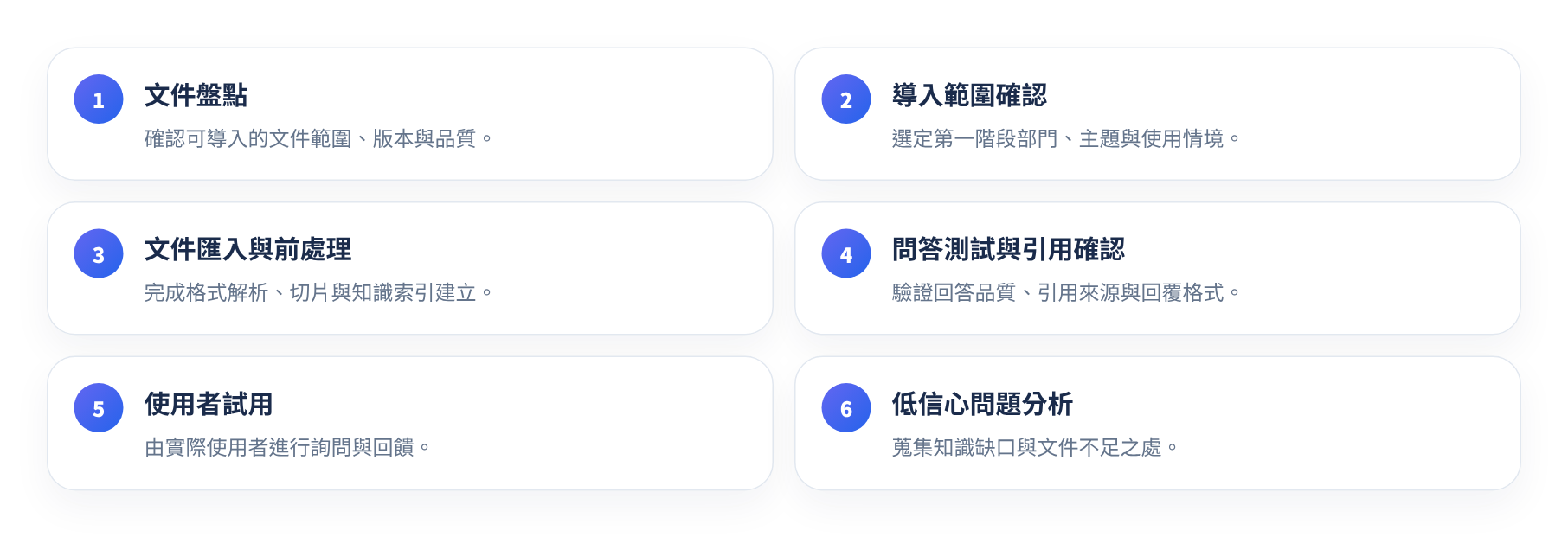
Start with one department, one batch of documents and one type of high-frequency question; then verify, refine and expand step by step.
Begin with a 3-month private-node pilot covering document inventory, environment setup, knowledge indexing, Q&A testing and a results review, then grow it into an enterprise knowledge governance platform.
Pilot inquiries: VK_service@amastek.com
Technologies
Document import and preprocessing: format parsing, chunking and knowledge index building. Q&A testing and citation check: verify answer quality, cited sources and reply format. Low-confidence analysis: collect knowledge gaps and missing documentation.